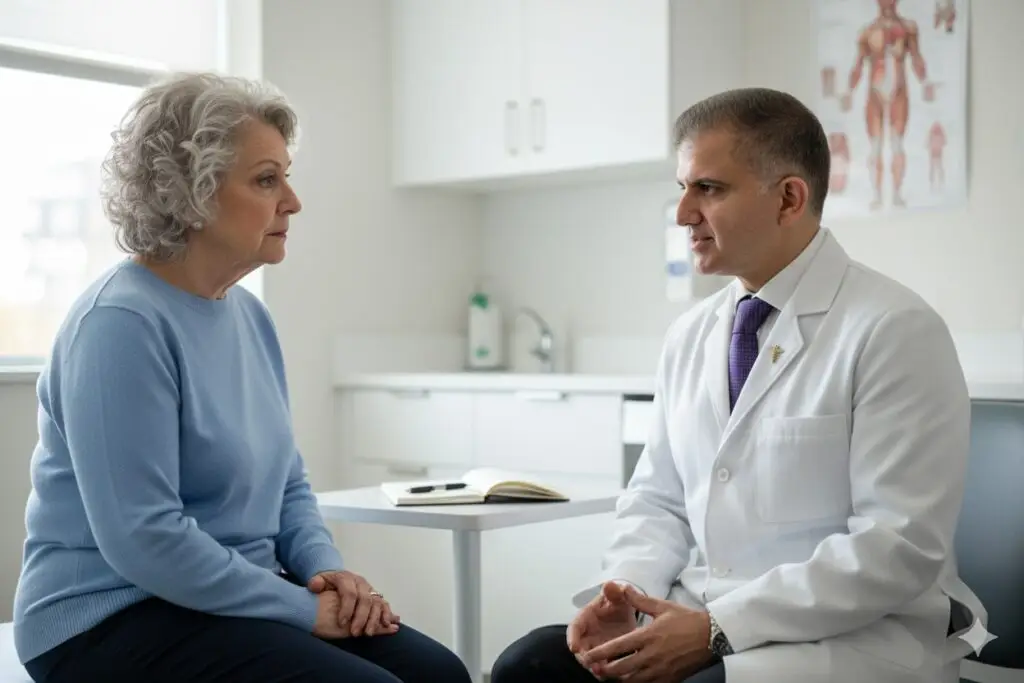
As a Geriatric Oncologist, I often hear people say, “age is just a number.” While that’s a wonderful sentiment for staying active and engaged in life, in medicine, age is a factor we can’t ignore, especially when it comes to cancer treatment.
But what if I told you that a different set of numbers—a comprehensive assessment of an individual’s overall health and well-being—is far more important than their chronological age?
This is the story of how a more holistic approach to cancer care can make all the difference for older adults.
Let me tell you about a patient, let’s call her Eleanor. At 78, she was diagnosed with a challenging, locally advanced pancreatic cancer. The standard of care for this type of cancer is an aggressive chemotherapy regimen. While effective, it’s also notoriously difficult to tolerate, with a high risk of severe side effects. For Eleanor, who had already been through a recent serious illness, this aggressive approach could have been devastating, potentially leading to a significant decline in her quality of life and independence.
This is where the Comprehensive Geriatric Assessment, or CGA, comes in. Think of it as putting on a different lens—one that allows us to see the whole person, not just the tumor. The CGA is a deep dive into an older adult’s life. We look at their functional status—how they manage daily activities like bathing and housework. We review all of their other health conditions, or comorbidities, and the medications they’re taking (a practice called “polypharmacy”). We assess their nutritional status, their cognitive health, and their social support system—who is there to help them on a day-to-day basis?
For Eleanor, the CGA revealed a much more nuanced picture. While she was impressively active, walking 45 minutes a day, she had also experienced a recent decline in her ability to perform some daily tasks. The assessment also highlighted significant nutritional concerns and the fact that she was taking 12 different medications. Most strikingly, a tool used as part of the CGA predicted an almost 90% risk of severe side effects from the standard chemotherapy.
Armed with this information, we were able to create a truly personalized treatment plan for Eleanor. Instead of the standard, high-dose chemotherapy, we started with a modified, lower-dose regimen with a plan to adjust as needed. We also put a “wraparound” supportive care plan in place, with a team of dietitians, physical therapists, and social workers to address the issues identified in the CGA. This approach is not about giving up or offering less effective treatment; it’s about providing smarter, safer, and more compassionate care.
Eleanor’s story is a powerful reminder that for older adults with cancer, success is about more than just shrinking a tumor on a scan. It’s about preserving quality of life, maintaining independence, and aligning treatment with what matters most to the patient.
So, if you or a loved one is an older adult facing a cancer diagnosis, I encourage you to be an active participant in your healthcare. Share the real details of your life with your doctors and ask about supportive care services. Because you are more than just your age, and your cancer care should reflect that.