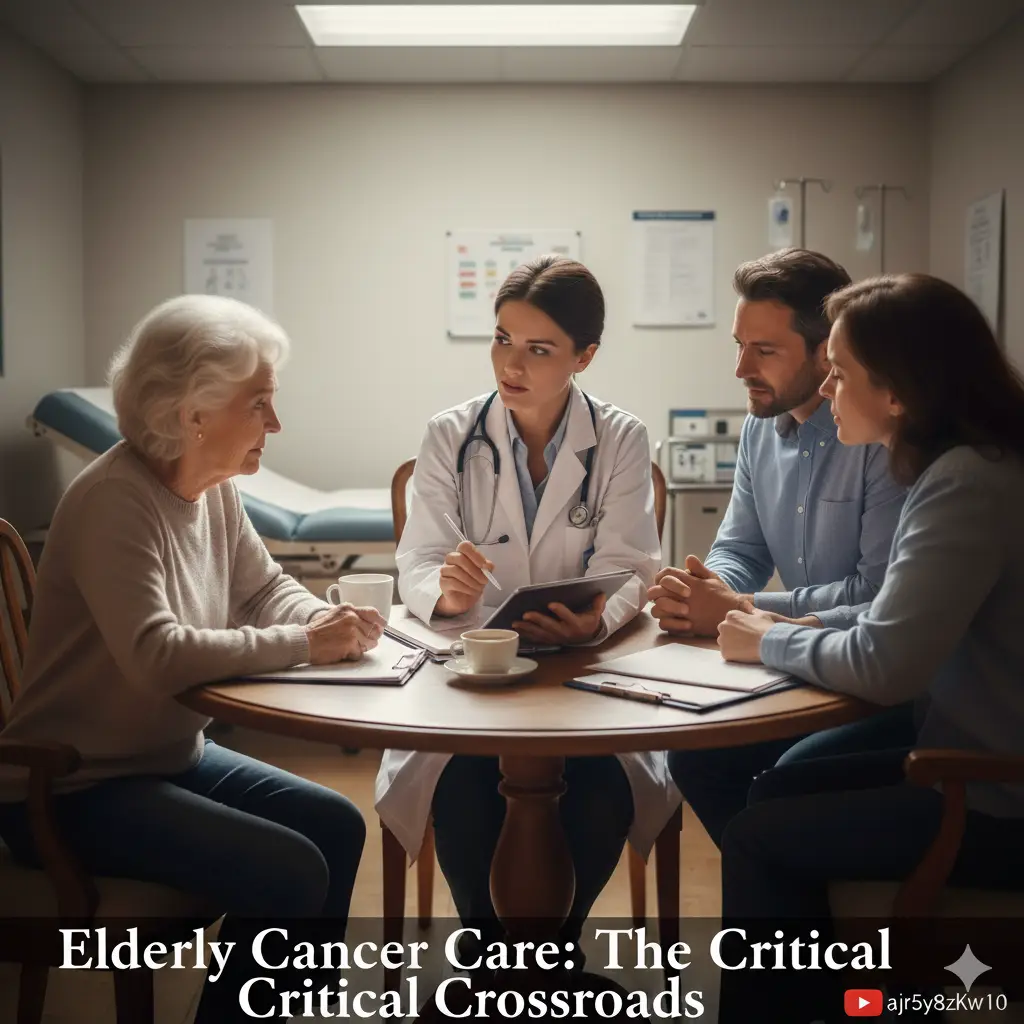
Navigating a cancer diagnosis is challenging at any age, but for the elderly, it presents a unique set of complexities. How do we balance aggressive, potentially curative treatments with the increased risks that come with age and other health issues? This question is at the heart of a compelling case study discussed in the video “The Art of Medicine: A Case Study in Shared Decision-Making for Elderly Cancer Care”, featuring an 81-year-old woman with breast cancer.
Faced with a choice between a less invasive procedure with lower risk (cryoablation) and a more traditional surgery (lumpectomy) with a higher chance of a cure, the patient, “Jane Smith,” and her medical team embarked on a journey of shared decision-making. While a geriatric assessment revealed her prefrail to frail status and complex medical history, it also highlighted her intact cognition, clear goals for a curative intent treatment, and the invaluable asset of a strong family support system.
This is where the “art of medicine” truly shines. As highlighted in the video, instead of letting the “high-risk” label dictate a less effective treatment, the medical team honored her informed choice for the more aggressive surgery. They didn’t see her age and health conditions as barriers, but as factors to be meticulously managed. By creating a comprehensive safety net around her—from specialized regional block anesthesia to a detailed post-operative plan involving her family—they transformed a high-risk procedure into a successful, patient-centered outcome.
This case, as concluded in the video, is a powerful reminder that in geriatric oncology, we must look beyond the numbers. True patient-centered care involves a deep dive into the individual’s life, values, and support systems. It’s about empowering patients to be the “pilot” of their healthcare journey, with the medical team and family as the essential “flight crew”, navigating the complexities together to achieve the best possible outcome. This approach ensures that treatment not only fights the disease but also fits the patient’s life and priorities.