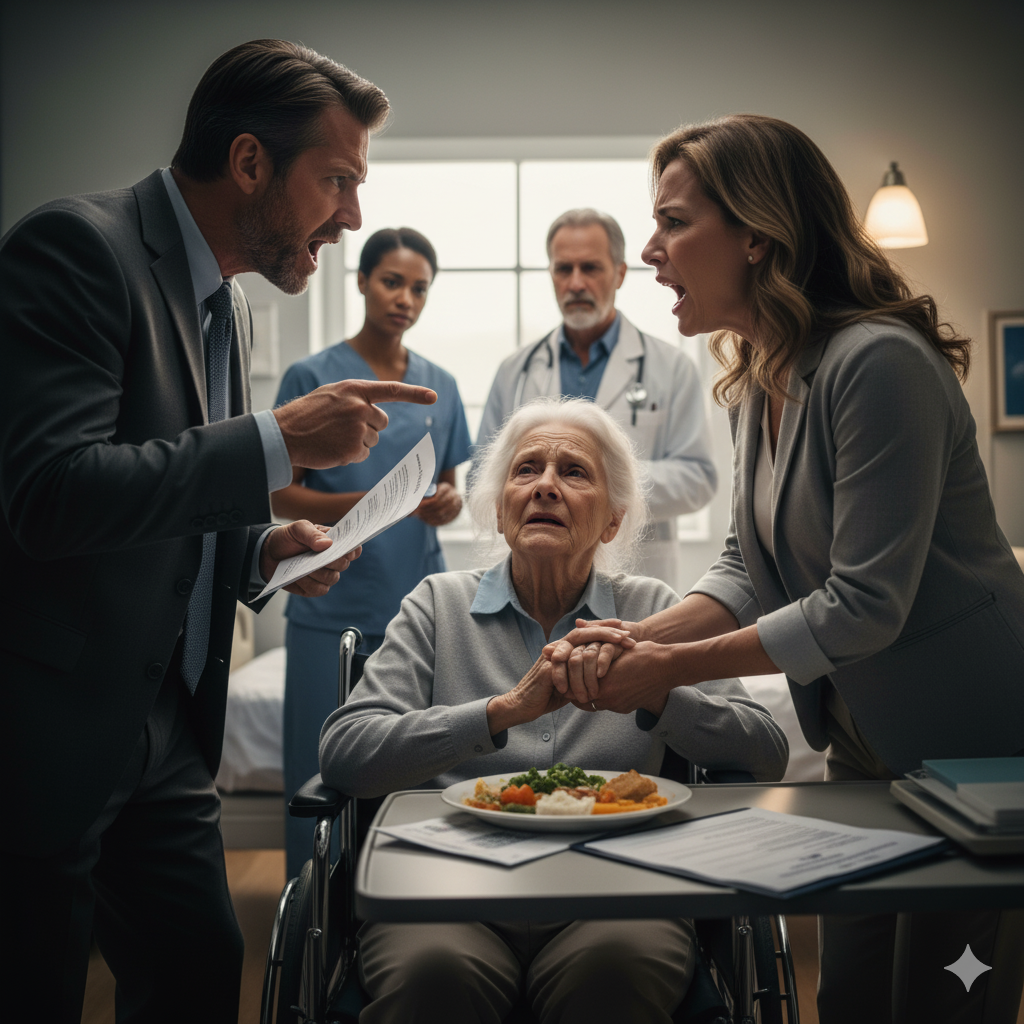
In medicine, we are trained to treat the disease. We see a tumor, and we create a plan to remove or shrink it. But what happens when the patient is profoundly frail, suffering from dementia, and their family is so locked in conflict they are “on the verge of killing each other”?
This isn’t a television drama; it’s a real-life case study that reveals the extraordinary, complex, and often invisible role of geriatric medicine. It’s a story about a medical emergency spiraling into an ethical and legal minefield, and how one specialist’s holistic approach managed to navigate the chaos.
A Patient Lost in the Storm
First, let’s understand the patient. She was elderly, profoundly frail, and lived in assisted living. She had a history of multiple falls, serious heart valve problems, and blood clots. On top of this, she was diagnosed with an aggressive tumor and had moderate-to-severe dementia, meaning she could not truly participate in her own complex medical decisions.
This medical complexity was eclipsed by the family dynamic. Her two children had completely opposing viewpoints:
- One child, a medical professional, pushed hard for aggressive surgery, focusing entirely on curing the disease.
- The other child, not in the medical field, was terrified of what surgery would do to her mother’s function and cognitive state, and was just as strongly against it.
Their interactions were not just disagreements; they were explosive. To complicate matters further, there was a “secretive change” to the healthcare proxy. The “pro-surgery” doctor-child had been the proxy for years. But the patient, while her dementia was already progressing, had signed new documents making the “anti-surgery” child the new proxy. This legal and ethical bomb was dropped during the initial consult, paralyzing any straightforward path forward.
The “Kitchen Sink” vs. The Person
Amid this chaos, the initial medical plan was overwhelming: a major surgery, complex plastic surgery for reconstruction, followed by radiation, and then possibly chemotherapy or immunotherapy.
This “kitchen sink approach” was, as the case review noted, disconnected from reality. It would have been a massive undertaking for a healthy 40-year-old, let alone this profoundly frail patient. The medical team was so focused on the tumor that, as the source put it, “nobody was actually paying attention to the patient at all.”
The Geriatrician as the “Airbag”
This is where the geriatrician’s intervention became critical. This wasn’t a simple consult. The geriatrician “took ownership of the chaos,” investing over 20 hours into this single case.
This “invisible work” involved:
- Mediation: Holding lengthy, separate phone calls with both warring children and managing their unannounced, emotional visits.
- Coordination: Constantly explaining the tangled family dynamics to social work and patient reps.
- Advocacy: Actively pushing the other medical teams to convene a proper tumor board and insisting on a sequential, one-step-at-a-time plan, not the “everything at once” approach.
The geriatrician became the “shock absorber” for the entire system. A great metaphor used in the review is that of an airbag. You can’t always prevent the “car crash”—in this case, the complex medical diagnosis combined with a dysfunctional family. But the geriatrician’s role is to deploy, to intervene, and to ensure the damage is as limited as possible.
This intervention worked. After the geriatrician’s push for a more considered tumor board discussion, the surgeon—who had been pushing for surgery—completely reversed course. The new plan was to start with immunotherapy.
The Unseen Value of Geriatric Care
The clinical outcome was fantastic. The patient tolerated the immunotherapy remarkably well, and the tumor shrank substantially. This validated the entire patient-centered approach the geriatrician had fought for.
The family conflict, however, didn’t vanish. The situation remained so volatile that the hospital’s legal department had to get involved to manage the family’s interactions with the staff.
But this case powerfully illustrates the core challenge of geriatric medicine: how do you quantify the value of preventing a catastrophe?
How do you bill for the 20+ hours of phone calls, mediation, and coordination that averted a devastating, high-risk surgery? How do you measure the value of preventing an ethical nightmare and a potential lawsuit?
Our system is built to value procedures. It struggles to see, measure, or reward the immense, high-impact “invisible work” of coordination, empathy, and advocacy. This case is a profound reminder that sometimes the best treatment isn’t a scalpel or a drug, but the profound, holistic, and human work of seeing the entire person and navigating them safely through the storm.