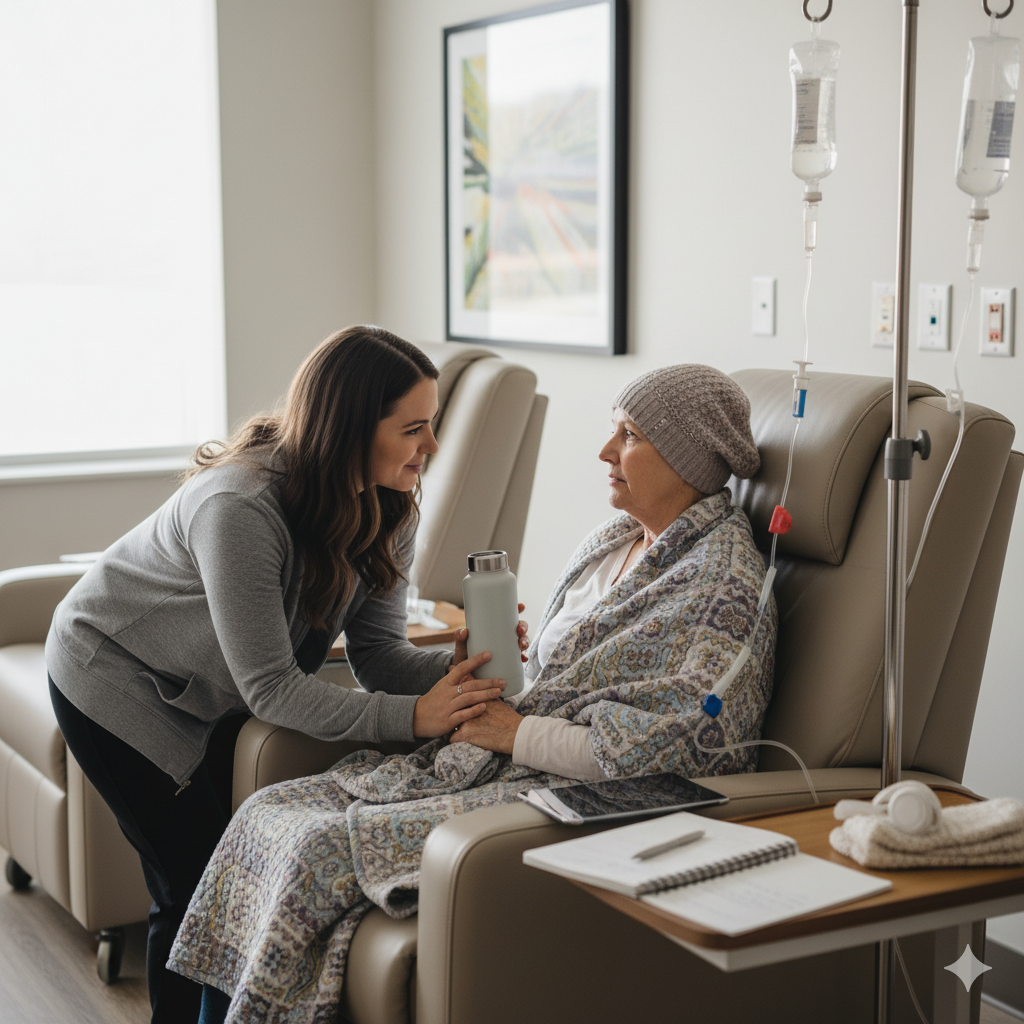
When someone you love is undergoing cancer treatment, it’s easy to feel helpless. But there is a vital, hands-on role that makes an immeasurable difference: the chemo companion. As highlighted in a guide by a geriatric oncologist, this role is often overlooked but is absolutely essential—transforming a draining ordeal into a manageable, and perhaps even meaningful, day.
You are more than just a visitor; you are an advocate, a buffer, and a provider of comfort. The medical team handles the medicine, but you handle the equally powerful human elements: dignity, peace of mind, and comfort. Here is a practical guide, inspired by years of infusion-suite observation, on how to excel in this heroic role.
Part 1: Pack the “Chemo Comfort Kit”
Preparation is your greatest tool. Think of this kit as a tangible expression of care, a toolkit designed to handle the long, unpredictable hours.
- Bring the Warmth: Infusion centers are notoriously cold. This, combined with the treatment itself, can leave patients feeling chilled to the bone.
- Layers: A zip-up hoodie or soft cardigan is perfect for easy on-and-off over IV lines.
- Comforts: Pack thick, fuzzy socks or slippers (with non-skid soles!).
- Home: A familiar blanket or quilt from home provides not just physical warmth but immense psychological comfort—a piece of home in a sterile place.
- Support: A U-shaped neck pillow can be a lifesaver for naps, and a small pillow for back support makes long hours in the chair more bearable.
- Pack Smart Sustenance: Nausea, fatigue, and changes in taste (like a metallic taste) can make eating a huge challenge.
- The Mantra: Your keywords are flexibility and blandness. What worked yesterday might be repulsive today.
- Hydration: Bring an insulated water bottle. Adding lemon or cucumber can sometimes cut through the metallic taste and make water more palatable.
- Snacks: Avoid strong smells. Think bland and easy: crackers, pretzels, dried cereal.
- Soothers: Ginger chews, peppermint tea bags (just add hot water), and soft items like applesauce cups or yogurt are often safe bets.
- Curate Diversions: The waiting is often the hardest part. The goal is engaging, low-effort distraction.
- Tech: A tablet or laptop loaded with pre-downloaded movies, shows, podcasts, or audiobooks. Hospital Wi-Fi can be unreliable.
- Essentials: Headphones are a must. A portable power bank and all charging cables are non-negotiable.
- Analog: Sometimes screens are too much. A physical book (large print can be helpful), crosswords, or Sudoku puzzles are grounding alternatives.
- Organize the “Go Binder”: “Chemobrain,” a mental fog that affects concentration and memory, is very real. You must become the second set of ears.
- In the Binder: Include their current medication list, insurance card, photo ID, and all medical team contact info.
- The Notebook: The most crucial item. Have a dedicated notebook and pen to write down questions before you go and to record every answer and instruction you receive.
- Personal Items: Chemotherapy is incredibly drying. Pack lip balm, unscented hand lotion, and a small pack of tissues. These little things make a big difference.
Part 2: Know the Rhythm of the Day
Knowing the typical flow of an infusion day can dramatically lower anxiety for both of you.
- Check-in & Vitals: The day starts with registration, followed by a nurse taking vitals. Weight is especially important, as many chemo doses are calculated precisely based on current body weight.
- Access: The nurse will either start a peripheral IV or access their port (a small device under the skin for long-term use).
- Blood Draw: Blood is drawn and sent to the lab as a safety check, ensuring their body is strong enough for treatment.
- The Wait: This is often the longest part of the day. You’ll wait for lab results and for the pharmacy to meticulously prepare the medications. This is normal. Pull out the snacks and distractions.
- Pre-Meds: Before the main event, they’ll receive “pre-medications” to prevent side effects, such as anti-nausea drugs or antihistamines (like Benadryl, which can cause drowsiness).
- Infusion: The nurse connects the chemo. The duration can vary from 30 minutes to many hours.
- Discharge: When finished, the nurse flushes the line, removes the IV, and provides crucial discharge instructions for home care. Get the notebook out again.
Part 3: Your Most Powerful Role: Advocate and Presence
Beyond packing bags, your most important job is simply being there.
- Be Their Voice: As the “scribe and speaker,” you are their advocate. When they are tired or foggy, you are the one to ask the questions from your notebook. You are the one to flag a nurse if they look cold or mention feeling nauseous. You give them permission to conserve their energy.
- Read the Room: You don’t always have to talk. Gauge their mood. Sometimes, the most supportive thing you can do is sit together in comfortable silence.
- The Power of Touch: Never underestimate the comfort of a hand held, a shoulder squeezed, or a foot rubbed. It’s a silent way of saying “I’m with you.”
- Small Acts of Service: Adjusting a pillow, refilling their water, or helping with a snack wrapper—these are the “cornerstones of comfort” that send a clear message of care.
On the toughest days, remember this: Your presence alone is powerful medicine. What you are doing, sitting in that chair beside them, is truly heroic work.