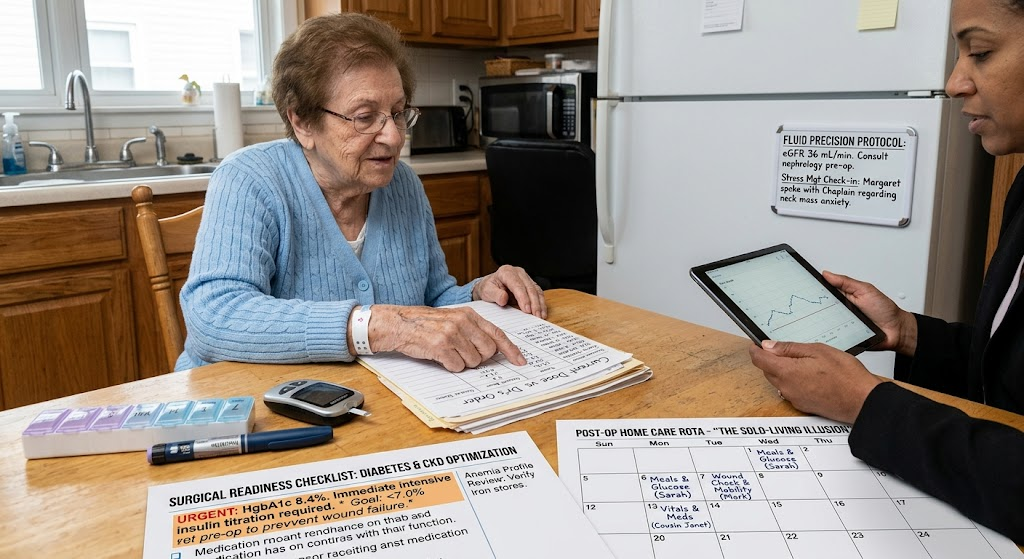
Profile: “Margaret,” an 83-year-old woman living alone who noticed a rapidly growing mass in her neck. While she is cognitively sharp and independent, she struggles with chronic kidney disease, anemia, and poorly managed Type 2 diabetes.
The Core Challenge
Margaret requires an extensive neck dissection to definitively diagnose and remove a highly suspicious tumor. While she is mentally ready, her labs reveal a major metabolic roadblock: her long-term blood sugar level (HgbA1c) is running at a dangerously high 8.4%. Operating on a body with uncontrolled blood sugar is an open invitation for severe wound infections, poor tissue healing, and acute kidney injuries.
Practical Takeaways for Families
- Blood Sugar Directly Dictates Surgical Healing: High glucose levels in the bloodstream act like a fertilizer for bacteria and actively paralyze the body’s natural wound-healing mechanisms. Bringing in a diabetes specialist or endocrinologist to aggressively optimize blood sugar prior to surgery is not a distraction from cancer care—it is a core requirement for surgical survival and preventing catastrophic wound breakdown.
- The “Solo-Living” Illusion: Many older adults are fiercely independent and manage beautifully alone in their apartments under normal circumstances. However, a major surgical recovery completely shatters that baseline. If a patient lives alone, family members cannot rely on the patient’s historical independence; a rota of physical support must be established in advance to manage post-op wound care, complex insulin adjustments, and basic meals.
- Kidney Disease Requires Fluid Precision: When a patient has an underlying kidney impairment (like a low eGFR), their margin for error with hydration is razor-thin. Too much IV fluid during and after surgery can overload their heart and lungs; too little fluid can cause permanent kidney failure. Families should verify that the surgical team has tailored a specific perioperative hydration protocol that respects the patient’s kidney baseline.
- Address Mood and Anxiety Proactively: A sudden, visible physical change like a neck mass paired with an impending surgery frequently triggers unspoken anxiety and irritability. Acknowledge these emotional hurdles early. Mental health support or relaxation strategies are key parts of surgical preparation, as high stress levels can further spike blood pressure and glucose levels.
- Reconcile Discrepancies in Medication: It is incredibly common for a patient’s actual daily pill and insulin dosing to drift away from what is officially ordered on paper. Sit down with your loved one, look at their actual pillboxes, and resolve any dosing discrepancies with their doctor before the day of surgery to ensure the hospital team has a flawless medical record.