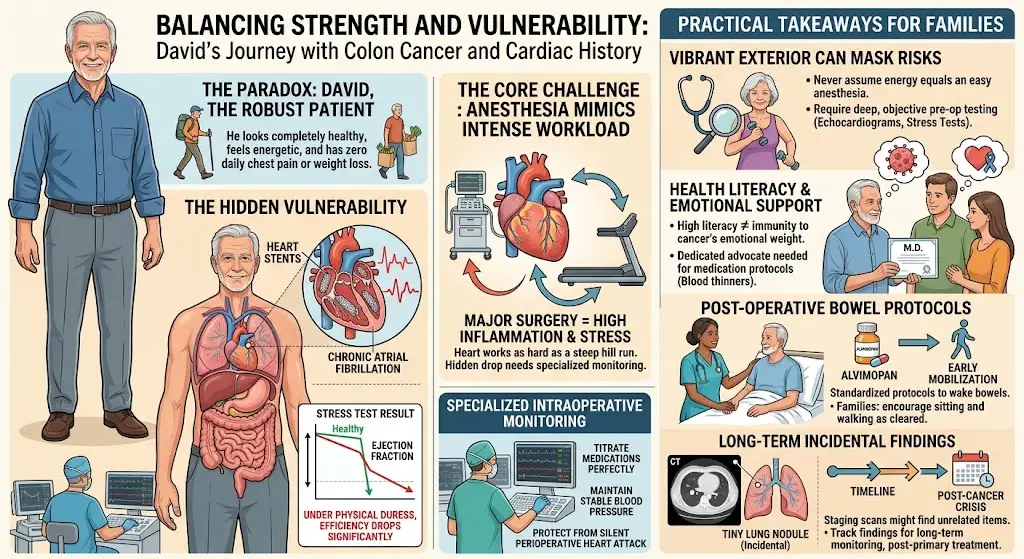
Profile: “David,” an 82-year-old retired medical professional diagnosed with colon cancer. He appears completely robust, has zero physical limitations, and possesses immense health literacy, but has a historical burden of heart stents and chronic atrial fibrillation.
The Core Challenge
David is the ultimate example of a patient who looks and feels entirely healthy on the outside, yet harbors significant internal cardiac vulnerabilities. While he does not experience any day-to-day chest pain or weight loss, advanced pre-operative stress testing revealed that under physical duress, his heart’s pumping efficiency (ejection fraction) drops significantly. Because major abdominal surgery puts an immense physical workload on the heart, this hidden drop requires highly specialized intraoperative monitoring.
Practical Takeaways for Families
- A Vibrant Exterior Can Mask Internal Risks: Never assume that because an older adult feels energetic, walks without an assistive device, and has no daily complaints, they can automatically breeze through anesthesia. Complex cardiovascular histories (like past stents or irregular heart rhythms) require deep, objective testing—such as recent echocardiograms and stress tests—before an incision is ever made.
- Anesthesia Mimics an Intense Workout: A major surgical procedure throws the body into a state of high inflammation and stress, forcing the heart to work just as hard as if the patient were running up a steep hill. Knowing exactly how the heart muscle responds to stress beforehand allows the anesthesiologist to perfectly titrate intraoperative medications, maintaining a stable blood pressure and protecting the patient from a silent, perioperative heart attack.
- High Health Literacy Still Needs Emotional Support: Patients who have professional backgrounds or high health literacy understand their diagnoses perfectly, but they are still completely vulnerable to the emotional weight of a cancer diagnosis. Families should ensure that even the most stoic, knowledgeable patient has a dedicated advocate to help navigate the complex multi-step protocols of holding and resuming heavy medications like blood thinners.
- Prepare for Post-Operative Bowel Protocols: Major colon surgeries often utilize specific, standardized protocols (including specialized medications like alvimopan) to help the bowels wake up safely after anesthesia. Families should support these efforts by encouraging the patient to sit up and walk as soon as the surgical team clears them, which drastically reduces the risk of post-op complications.
- Track Long-Term Incidental Findings: Often, pre-operative staging scans will pick up minor, unrelated findings, such as tiny lung nodules. While the immediate focus must remain on treating the primary colon cancer, ensure these secondary items are noted in your personal records so they can be monitored according to standard medical guidelines once the immediate cancer crisis has passed.