Key Points for Mastering Medication Management:
- Establish a Dedicated Medication Station: Create a cool, dry, well-lit, accessible, and secure “command center” for all medications, never in the bathroom, to prevent degradation and errors.
- Maintain a Comprehensive Master Medication List: Keep an up-to-date, clearly written list of all medications (brand/generic names, dosages, purposes, schedules, special instructions, prescribing doctor) as your essential roadmap and safety net.
- Utilize the “One-at-a-Time” Pill Filling Method: Dedicate a distraction-free time each week to fill your pill organizer by focusing on one medication bottle at a time, comparing it against your master list, and putting it away before moving to the next.
Summary:
Managing multiple medications, especially after a cancer diagnosis, can be overwhelming and lead to serious consequences like reduced treatment effectiveness or adverse side effects. This guide outlines how to establish a systematic approach to medication management by creating a dedicated medication station, maintaining a comprehensive master list, and employing a meticulous “one-at-a-time” pill filling method. These strategies, combined with ongoing vigilance and open communication with your healthcare team, empower older adults with cancer and their caregivers to enhance safety, consistency, and peace of mind throughout their treatment journey.
Practical Guide: Mastering Medication Management for Older Adults with Cancer
A cancer diagnosis often introduces a bewildering array of new medications—oral chemotherapy, anti-nausea drugs, pain relievers, steroids—each with its own confusing schedule and specific instructions. For older adults who may already be managing multiple prescriptions for chronic conditions, this added complexity can quickly lead to feeling overwhelmed and bewildered by a multitude of pill bottles.
This feeling of being overwhelmed isn’t merely inconvenient; it strikes at the very core of effective treatment. Simple mistakes, such as forgetting a dose, taking a pill at the wrong time, or even consuming it with the wrong food (like grapefruit juice), can have serious consequences. These errors can lead to unnecessary side effects, emergency room visits, and, critically for oncology patients, can reduce the effectiveness of vital cancer treatments by as much as 30%. Therefore, actively managing medications isn’t just a chore; it’s a critical, proactive component of your cancer care and prognosis.
Section 1: Establishing Your Medication Command Center
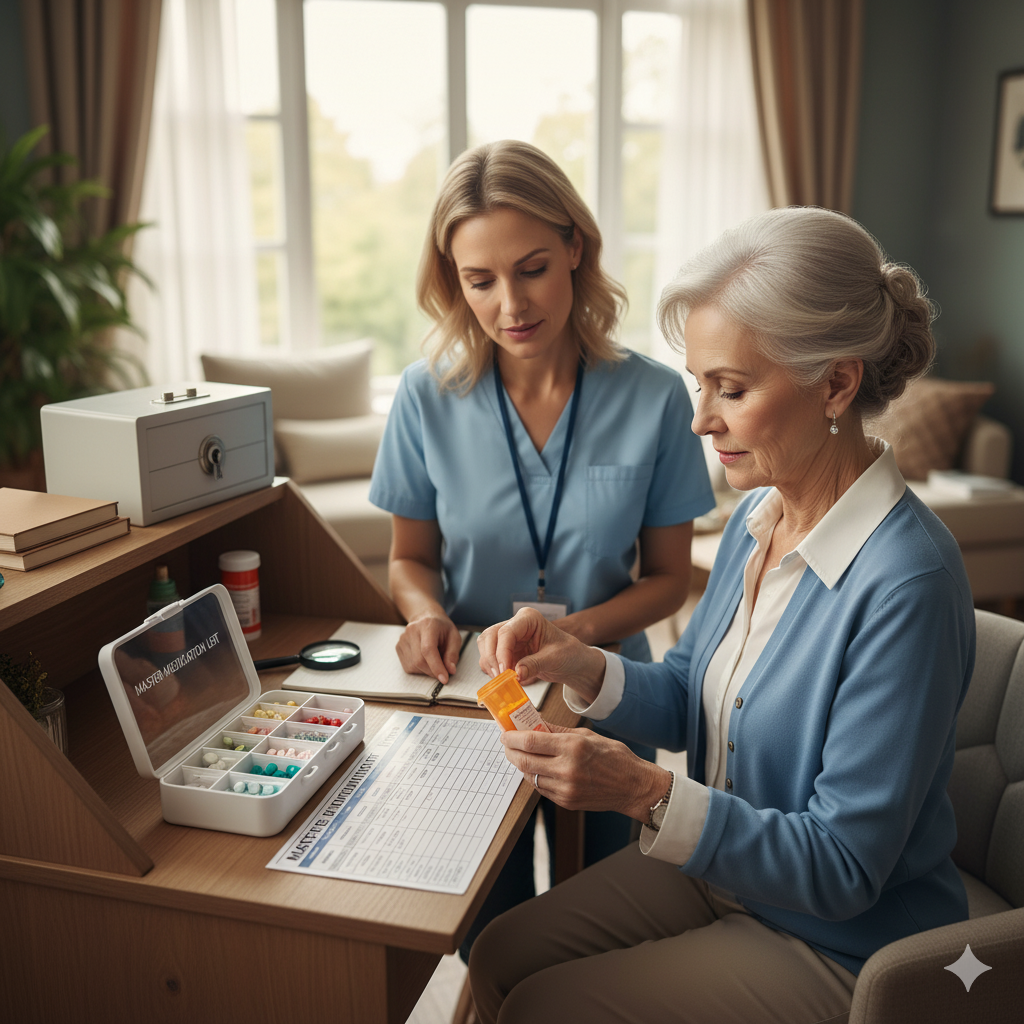
The first step in taking control of your medication regimen is to create a dedicated, well-organized medication station. Think of it as establishing a central hub for your health, designed to boost safety, ensure consistency, and bring peace of mind.
- Choose the Right Location (and Avoid the Wrong One):
- The Absolute Rule: Not in the Bathroom! It’s a common mistake to store medications in bathroom cabinets. However, the heat and humidity from showers and baths can chemically degrade medications, making them less effective or potentially even harmful or toxic. This is a hidden form of medication mismanagement that can undermine vital treatments.
- Ideal Spot Criteria: Look for a location that is consistently cool and dry, away from heat sources (like ovens or direct sunlight) and moisture (like sinks). It must be well-lit for easy label reading, easily accessible for you or your caregiver, but not in a high-traffic area where it might get knocked over.
- Security for Families: If children or curious pets are in the home, the station must be out of reach and secure. For controlled substances like strong pain medications, seriously consider using a lockbox for an extra layer of safety.
- Practical Examples: A dedicated shelf in a kitchen cabinet (away from the stove and sink), a drawer in a bedroom dresser, or a small, sturdy table in a quiet living room corner can all work well.
- Equipping Your Medication Station:
- The Right Pill Organizer: This is the heart of your station. Look for one with compartments large enough to hold all pills for a specific time slot (some cancer regimens involve several pills at once) and easy-to-open lids, especially if you have arthritis or reduced dexterity. A weekly organizer with at least two slots per day (morning and evening) is often the most practical for complex situations, providing good organization without being overwhelming.
- Master Medication List: This is the single most important document. It’s your roadmap, safety net, and communication tool. It must be clear, ideally typed or written in large print, and easy to read at a glance.
- What Your Master List Needs:
- Medication Name: Both brand and generic names to avoid confusion.
- Dosage: Be specific (e.g., “500 mg,” not just “one pill”).
- Purpose: Written in plain language (e.g., “for pain,” “oral chemotherapy for breast cancer”) to help you remember why you’re taking each one.
- Specific Schedule: Not just “twice a day,” but “one pill twice a day at 9:00 AM and 9:00 PM” to eliminate ambiguity.
- Special Instructions: Vital details like “take with a full meal,” “take on an empty stomach,” or “do not crush.” These instructions are crucial for proper drug absorption and preventing side effects, especially for older adults with sensitive stomachs.
- Prescribing Doctor’s Name: So you know who to call with questions about that specific medication.
- Updates and Copies: Keep this list updated and consider carrying a copy in your wallet or giving one to a trusted family member.
- Essential Accessories:
- Notebook and Pen: For logging “as-needed” medications (time, dose, reason), jotting down side effects, or questions for your doctor.
- Pill Splitter/Crusher: Use only if explicitly approved by your pharmacist or oncologist. Many pills (especially coated or time-release formulas) can become dangerous or ineffective if altered.
- Magnifying Glass: Surprisingly handy for reading tiny print on bottles.
- Calendar/Whiteboard: For tracking refill dates.
- Clearly Posted Phone Numbers: Your pharmacy, oncologist’s office, primary care doctor for quick access.
- Sharps Container: A puncture-proof container for safely disposing of used needles and syringes if you use injectable medications.
Section 2: The Weekly Safety Check-In: Filling Your Organizer Meticulously
Filling your pill organizer isn’t just a chore; it’s a critical weekly safety check-in designed to minimize errors.
- Create a “No Interruption Zone”: Set aside 15-20 minutes each week. Turn off the TV, silence your phone, and ask family members not to disturb you. This small investment of time yields huge returns in accuracy and peace of mind.
- Wash Your Hands: A simple but important step before you begin.
- The “One-at-a-Time” Method: This deliberate technique helps eliminate common errors:
- Lay out your weekly pill organizer, all original prescription bottles, and your master medication list.
- Pick up only one medication bottle.
- Carefully read the label on that bottle: check the name, dosage, and instructions.
- Compare this information against your master list to confirm accuracy.
- Then, and only then, carefully place that single medication into all the correct compartments in your organizer for the entire week.
- Once you’ve done that for the whole week for that one drug, put that bottle completely away before picking up the next. This step-by-step approach makes it incredibly difficult to accidentally mix pills, double a dose, or forget one entirely, as your full attention is on a single medication at a time. For an extra layer of safety, if possible, ask a family member or caregiver to double-check the filled organizer against your master list.
Section 3: Ongoing Vigilance and Essential Warnings
Setting up your system is crucial, but continuous vigilance is key for long-term safety, especially with complex cancer treatments.
- Never Mix “As-Needed” Pills: Do not put medications you take only occasionally (e.g., anti-nausea pills for symptom flares, breakthrough pain relievers) into your weekly organizer. Keep them in their original, clearly labeled bottles. When taking an as-needed dose, immediately record the time, dose, and reason in your notebook. This prevents accidental overdoses and provides your doctor with accurate information on your symptom management.
- What if You Miss a Dose? Do NOT Double Up! The answer is almost always to not take two doses next time. Doubling up can be far more dangerous than missing one dose, particularly with powerful medications like chemotherapy. Immediately call your pharmacist or doctor’s office for precise instructions. Do not guess or try to catch up on your own.
- The “Brown Bag Review”: At least once a year, or more often if your medications change frequently, gather everything you take—all prescription bottles, over-the-counter medications (Tylenol, allergy meds), vitamins, and herbal supplements—into a bag. Take this bag to your next appointment with your pharmacist or doctor. This comprehensive review is invaluable for catching dangerous drug interactions, spotting duplicate therapies, or identifying old, outdated prescriptions that should be discarded.
- Beware of Supplements: The word “natural” does not automatically mean “safe,” especially for older adults undergoing cancer treatment. Many herbal products (even seemingly harmless ones like St. John’s Wort) can interact dangerously with chemotherapy drugs, altering their effectiveness or causing harmful side effects. Common things like grapefruit juice can severely impact how certain medications are absorbed. Even some antioxidants can interfere with how specific chemotherapies work. Never start taking a new vitamin or supplement without explicit approval from your oncologist. Your body’s chemistry during treatment is highly sensitive, and these interactions can seriously impact your health and the success of your treatment.
Conclusion: Empowering Your Journey with Control
Taking charge of your medication management is one of the most impactful proactive steps you can take in your cancer journey. By setting up a dedicated medication station, meticulously maintaining a master list, and diligently filling your organizer, you transform a potential source of anxiety and fear into a robust system of control.
This system provides confidence that you are doing everything possible to make your treatment as safe and effective as it can be, free from preventable mistakes. In the complex world of modern medicine and cancer care, your medication station becomes a personal pillar of strength—your command center. Beyond the physical safety benefits, this deliberate approach can profoundly reduce stress and enhance your feeling of agency and control during a time when you might otherwise feel powerless. It’s about taking back power and building resilience, ensuring that every pill taken contributes precisely to your healing and quality of life.