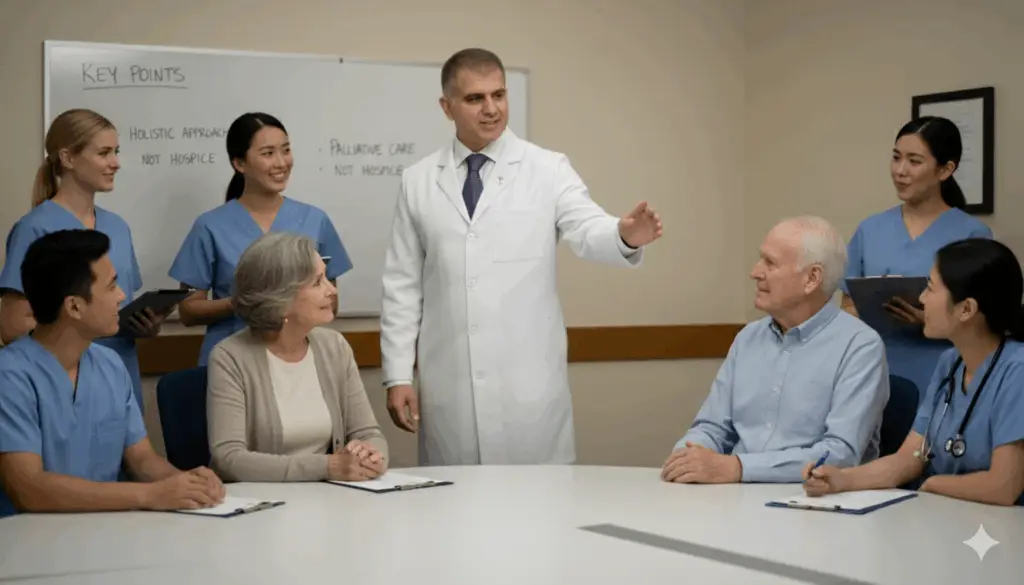
Key Points
- You Are the Center of Your Care Team: A modern cancer care team is a collaborative circle, with you and your family at its absolute center. Every professional on the team works together to provide the best treatment while honoring your personal goals and values.
- The Geriatric Oncologist: Your Navigator: A geriatric oncologist is a “captain” who specializes in treating cancer with medicines while understanding the unique needs of older adults. They tailor treatment plans to your overall health, lifestyle, and priorities, proactively managing side effects and coordinating with other doctors for a holistic approach.
- The Core Medical Specialists: Beyond the oncologist, your core team may include a Radiation Oncologist (for precise radiation therapy, meticulously protecting healthy tissues) and a Surgical Oncologist (who specializes in cancer operations and coordinates closely with the rest of your team).
- Oncology Nurses: The Heart of the Team: Nurses are your day-to-day advocates and a crucial source of practical advice and comfort. A Nurse Navigator guides you through the healthcare system, while Infusion Nurses administer medications and offer invaluable tips for managing side effects.
- Allied Health Professionals: Holistic Support: A wider circle of professionals supports your overall well-being. This includes Social Workers (for emotional support and practical resources), Pharmacists (safety experts who review all medications to prevent interactions), Registered Dietitians (for personalized nutrition during treatment), Physical Therapists (for strength, balance, and mobility), and Occupational Therapists (for maintaining independence in daily activities).
- Palliative Care: Comfort from Day One: Crucially, palliative care is NOT hospice. It is specialized care focused on symptom management and improving quality of life, available at any stage of a serious illness, right from diagnosis. It provides an extra layer of support to make you as comfortable as possible throughout your entire treatment journey.
- Your Caregivers: Essential Allies: Caregivers are indispensable. They act as a second set of ears, advocate on your behalf, provide practical support (transportation, meals), and offer vital emotional encouragement. Recognizing and supporting their well-being is critical to their ability to provide ongoing care.
Summary
This guide demystifies the complex cancer care team for older adults and their caregivers, placing the patient and family at the center. It highlights the specialized role of the geriatric oncologist, the functions of core medical specialists (radiation and surgical oncologists), and the invaluable day-to-day support provided by oncology nurses. Furthermore, it introduces the critical contributions of allied health professionals—social workers, pharmacists, dietitians, physical, and occupational therapists—who offer holistic support. The guide emphasizes that palliative care is about comfort at any stage, not just end-of-life, and underscores the essential role of caregivers, stressing the importance of their own well-being.
A Practical Guide for Caregivers
Introduction: Your Cancer Care Team
Receiving a cancer diagnosis can instantly shift your entire world, especially for older adults who may be navigating this new reality alongside other existing health conditions or concerns about maintaining independence. It’s a lot to take in. But it’s crucial to remember: you are not alone in this. Modern cancer care is a collaborative, human-centered team sport. This guide aims to empower you by clearly defining who makes up this essential care team, helping you understand all the dedicated professionals ready to support you and your family. Think of your care team as a circle, with you and your family right at the center. Every person within that circle has a specific role, but they are all working together towards one goal: to give you the best possible treatment while always honoring your personal goals and values.
Chapter 1: The Core Medical Team
These are the doctors and nurses you’ll probably interact with most frequently, the ones diagnosing and creating your immediate treatment plan.
- The Geriatric Oncologist (or Medical Oncologist): The Captain
- Often considered the “captain” of your medical team, they specialize in treating cancer with medicines (chemotherapy, immunotherapy, targeted therapy, hormone therapy).
- A geriatric oncologist has extra specialized training in the unique care needs of older adults. They understand the complex interplay between aging, other health conditions you might have, and the cancer treatment itself.
- They see the “bigger picture,” focusing on the whole person, not just the tumor. Their goal is to tailor your treatment plan to your overall health, lifestyle, and, crucially, what matters most to you – your priorities. They discuss benefits and risks, proactively manage side effects, and coordinate carefully with your other doctors to ensure all your health needs are looked after. This “whole person” approach is critical, especially when balancing aggressive treatments against maintaining quality of life and independence.
- The Radiation Oncologist: The Precision Strategist
- If radiation therapy is part of your treatment (using high-energy rays to destroy cancer cells), the radiation oncologist designs a meticulously detailed plan.
- Their work is a masterclass in precision, delivering a powerful dose directly to the cancer while rigorously protecting healthy surrounding tissues.
- They determine the exact number of treatments and are crucial for managing any side effects specific to radiation. Their meticulous focus on preserving healthy tissue is as critical as the treatment delivery itself, balancing power with protection.
- The Surgical Oncologist: The Direct Intervention Expert
- If surgery is necessary to remove the cancer, you’ll work closely with a surgical oncologist, who specializes in cancer operations.
- They will explain the procedure in detail, discuss recovery, and, critically, work closely with the rest of your team to coordinate the optimal timing for surgery within your overall treatment plan.
- Their unique value isn’t just their skill with a scalpel; it’s ensuring their part integrates seamlessly with any medication or radiation therapies, creating a truly coordinated attack.
- Oncology Nurses: The Heart and Soul
- Oncology nurses are often called the “heart and soul” of the care team, and you’ll interact with several, all with specialized cancer care training.
- Nurse Navigators: Think of them as your personal guide through the often-complex healthcare system. They help schedule appointments, ensure you understand where and when you need to be, and make sure your questions reach the right person, preventing you from feeling lost or overwhelmed.
- Infusion Nurses: These are the nurses who administer medications like chemotherapy through an IV. They carefully monitor you for any reactions during the infusion and provide a wealth of practical, day-to-day advice for managing side effects (e.g., coping with nausea, dietary suggestions, energy conservation tips for fatigue). Their role is not just about giving medicine but providing actionable guidance for getting through treatment.
- Oncology nurses bridge the gap between medical complexity and the human experience, offering constant reassurance and practical support. They are often the first person you turn to with immediate, practical “what do I do about this?” questions and are absolutely indispensable members of your support system.
Chapter 2: Allied Health Professionals: Holistic Support
Cancer affects so much more than just your physical body—it touches your emotional well-being, daily routines, and even practical things like finances. Allied health professionals provide essential holistic support.
- The Social Worker: Your Lifeline and Problem Solver
- Social workers are an invaluable resource for navigating both the practical and emotional challenges of cancer.
- They are trained counselors who can help you and your family cope with stress, anxiety, and difficult conversations.
- They are also incredibly practical problem solvers, connecting you with vital community resources, helping you understand financial assistance programs, arranging transportation to appointments, and guiding you towards support groups. They alleviate burdens you might not even realize are weighing you down, often proactively spotting potential issues.
- The Pharmacist: Your Medication Safety Expert
- Pharmacists are a vital safety expert on your team. They meticulously review all your medications—prescriptions, over-the-counter drugs, vitamins, supplements—to prevent harmful drug interactions, which can be a real danger with complex cancer treatments.
- Beyond safety checks, they provide detailed information about your cancer drugs, explain exactly how to take them safely, and offer good strategies for managing common side effects. Their comprehensive oversight provides peace of mind when juggling a complex drug regimen.
- The Registered Dietitian: Your Nutritional Ally
- Good nutrition is essential during cancer treatment to maintain strength, tolerate treatment better, and recover faster. An oncology-specialized registered dietitian assesses your specific nutritional needs, which can change dramatically during treatment.
- They help you manage side effects that impact eating (loss of appetite, taste changes, difficulty swallowing) by suggesting specific food textures, flavor enhancers, or nutrient-dense, easy-to-digest foods to maintain energy. They are experts at creating personalized eating plans to ensure your body gets the fuel it needs.
- Physical Therapists (PTs) and Occupational Therapists (OTs): Maximizing Function and Independence
- This vital pair works towards keeping you functional and maximizing your quality of life.
- A Physical Therapist (PT) primarily helps with strength, balance, and mobility. If fatigue makes it hard to walk or climb stairs, a PT designs exercises to combat fatigue, improve gait, and help you move safely. (Think: PT is about moving).
- An Occupational Therapist (OT) focuses on helping you perform your daily activities, or “occupations,” like dressing, cooking, bathing, and managing your home. If treatment makes these tasks difficult, an OT can teach new strategies, energy-saving techniques, or recommend adaptive equipment (e.g., grab bars, specialized kitchen tools) to help you conserve energy and stay independent. (Think: OT is about doing).
- The Palliative Care Team: Comfort and Well-being from Day One
- This is a crucial distinction: PALLIATIVE CARE IS NOT HOSPICE. This misconception often leads people to miss out on vital support.
- The palliative care team specializes exclusively in symptom management and can be involved at any stage of a serious illness, right from the time of diagnosis, not just at the end of life.
- Their primary goal is to improve your quality of life. They provide an extra layer of support focused on managing pain, nausea, fatigue, anxiety, and any other distressing symptoms. They work hand-in-hand with your oncology team to ensure you are as comfortable as possible throughout your entire treatment journey. Palliative care is about living better with the illness and its treatment; it is not a sign of giving up.
Chapter 3: You Are the Team Captain
While all these experts bring clinical knowledge and technical skills, you and your loved ones bring the most important expertise of all: the knowledge of yourself, your life, your history, your values. You are the undisputed leader of this team.
- Be the Expert on You: Nobody knows your body, history, and daily life better than you. Openly share all your health conditions (not just the cancer), all medications (including OTC, vitamins, supplements), and your typical daily routines and support system. This holistic picture helps your team understand you beyond just the diagnosis.
- Define Your Goals: Clearly articulate what is most important to you right now and in the coming months. Is it attending a grandchild’s graduation, maintaining a beloved hobby, or prioritizing comfort and quality of life above everything else? Defining these personal goals helps your team tailor a treatment plan that truly aligns with what makes your life meaningful.
- Ask Questions (Don’t Hold Back): Never hesitate to ask questions. Write them down as you think of them, bring your list to appointments, and if you don’t understand an answer, ask for it to be explained again, perhaps in a different way or with an analogy. Understanding your diagnosis, treatment options, and potential side effects is key to making informed, comfortable decisions.
- You Make the Final Decision: Your team will present options and recommendations, but the final choice is always yours, guided by your values, goals, and preferences. You are in control of the path forward.
Chapter 4: Your Caregivers: Essential Allies
Your caregivers are absolutely essential allies in this journey. This could be a spouse, partner, adult children, siblings, friends, or even neighbors.
- Second Set of Ears: Appointments can be overwhelming. Caregivers help remember information, take notes, and ask for clarification on points you might have missed or didn’t grasp.
- Your Advocate: They can help voice your concerns and ensure your questions get answered, especially if you’re not feeling your best or are too tired to speak up forcefully.
- Practical Support: They provide huge practical support—driving to appointments, picking up prescriptions, helping with meals and household chores. This allows you to focus your limited energy on healing.
- Emotional and Moral Support: Perhaps most crucially, they offer emotional and moral support—a shoulder to lean on, a listening ear, and the encouragement you need to get through tough days.
- Caregiver Well-being is Critical: Caregiving is incredibly demanding, and burnout is a very real risk. Caregivers must seek support for themselves (support groups, counseling, or asking other friends/family for help or a break). A healthy, rested, and supported caregiver is a much more effective caregiver for you in the long run. Taking care of themselves isn’t selfish; it’s essential for their own sustainability and their capacity to provide the ongoing support you need.
Conclusion: An Active, Collaborative Process
Building your cancer care team is an active, collaborative process; it’s not just something that happens to you. By understanding these different roles, by actively engaging, asking questions, and sharing your goals, this comprehensive team—led by you and your closest support—can create a plan that’s personalized, supportive, and truly effective for you. This plan doesn’t just treat the cancer cells; it genuinely cares for you as a whole person, respecting your wisdom, your independence, and your wishes every single step of the way. It shifts the focus from just fighting a disease to supporting your entire well-being.